
Ajrakhpur and Bhujodi: understanding Kutch through cloth
Cloth is one of the best introductions to Kutch. Look closely at a printed cotton length and a handwoven shawl and you begin to see two different kinds of knowledge: one built through successive impressions and colour, the other through the structure of the fabric itself.
- Ajrakh printing
- Bhujodi weaving
- Makers & materials
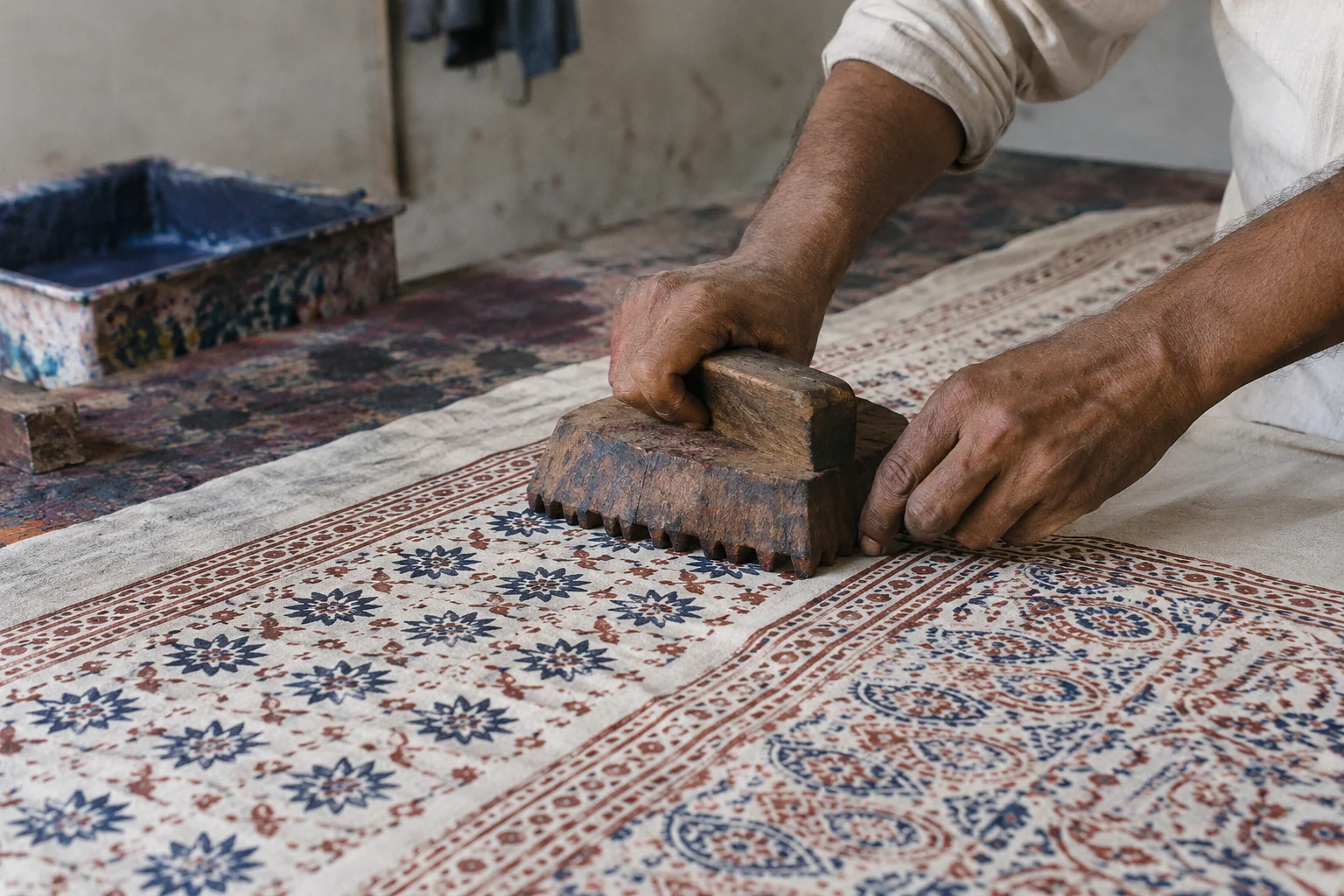
Ajrakh is a process, not just a pattern
Khamir describes Ajrakh as a demanding sequence of washing, printing, dyeing and drying. Recognisable geometric arrangements often combine indigo, red, black and pale areas. The precision of repeated impressions is only one part of the work.
At a workshop, ask which stage is happening that day. A cloth being printed is not necessarily near completion. Time between stages, water, drying and the response of the fibre all matter. An explanation of the sequence makes a finished textile easier to appreciate.
Source: Khamir: Ajrakh blockprint ↗Ask about colour without making assumptions
An Ajrakh-style pattern does not by itself establish how a textile was dyed or printed. Ask whether the piece was hand-block printed, what fibre it uses and which dyes were used for that particular cloth. Avoid assuming every item in a craft village has the same production method.
If natural dyes are important to you, discuss the actual piece rather than relying on a general workshop description. Ask for washing advice and whether the cloth should be washed separately. Care instructions are useful evidence that the seller understands the material.
Bhujodi: follow the thread to the loom
Gujarat Tourism identifies Bhujodi, near Bhuj, as an important textile and craft centre associated with the Vankar community. A weaving visit changes what you notice: the arrangement of warp threads, the movement of the weft and the making of a border.
Printing and weaving are different skills. A textile trail should leave time for both instead of treating them as interchangeable shopping stops. Ask which parts of a piece are woven, printed, embroidered or added afterwards, and where each part of the work took place.
Source: Gujarat Tourism: Bhujodi ↗How to shop thoughtfully
Start with something you will use: a stole, yardage, a shawl or a small textile for the home. Check the fibre, dimensions and finishing. Examine a handwoven edge with curiosity rather than expecting machine uniformity, while still checking that the piece suits its intended use.
Ask the maker’s name and keep it with the textile. Request a receipt, agree the price before packing and check how to protect delicate work on the journey home. A useful conversation about provenance is more valuable than bargaining as a performance.
Build a craft day around your interests
For a serious textile visit, tell us what you want to learn before the route is finalised. A morning with one maker may be more satisfying than several rushed shops. Workshop arrangements should be confirmed rather than assumed.
Bhuj-based craft visits can also provide a gentler arrival or departure day, provided your actual transport times allow it. Do not book a tight last-minute workshop before a flight or train. Museum closures, workshop schedules and local traffic can change the order of the day.
Before you go
Are Ajrakhpur and Bhujodi the same place?
No. They are separate craft destinations. Ajrakh printing and Bhujodi weaving should be planned as distinct visits.
Is every Ajrakh-patterned fabric naturally dyed?
Do not assume so. Ask about the specific fabric, printing method and dyes used.
Can we watch a loom in use?
A visit may include a demonstration when a participating workshop is receiving guests. Confirm the arrangement in advance.
Sources & further reading
Historical, landscape and craft context is drawn from the organisations below. Route suggestions and visitor etiquette are our editorial guidance. Check current visitor arrangements before travelling.
Build a journey around what interests you.
Share your dates, group size and the places you would love to understand better. Our Bhuj team will help plan a sensible route.
Explore private cabs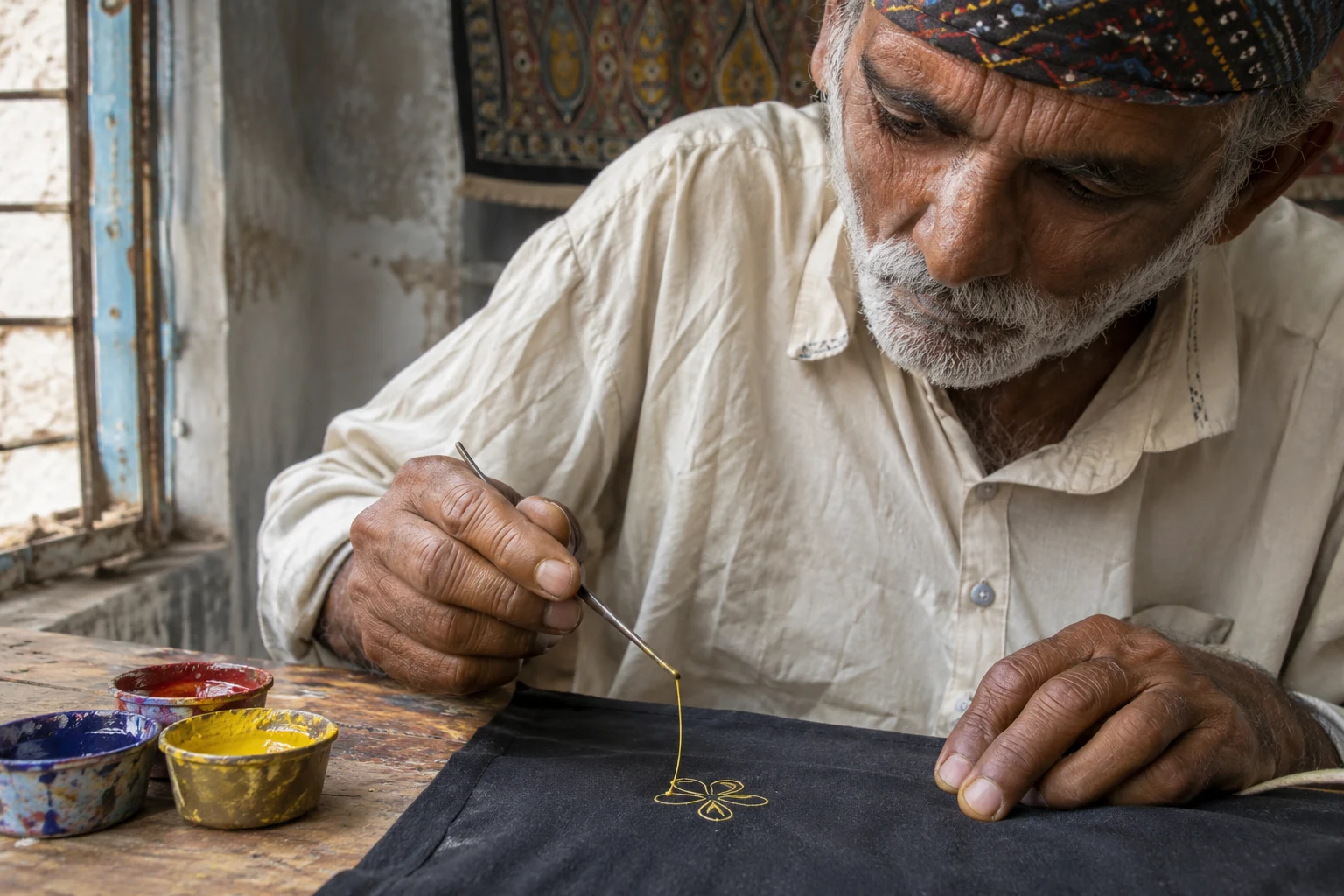
Nirona beyond the souvenir: Rogan painting, bells and lacquer
Learn what makes Nirona’s Rogan painting, metal bells and lacquer work distinctive, and how to plan a respectful artisan-workshop visit from Bhuj.
Read the story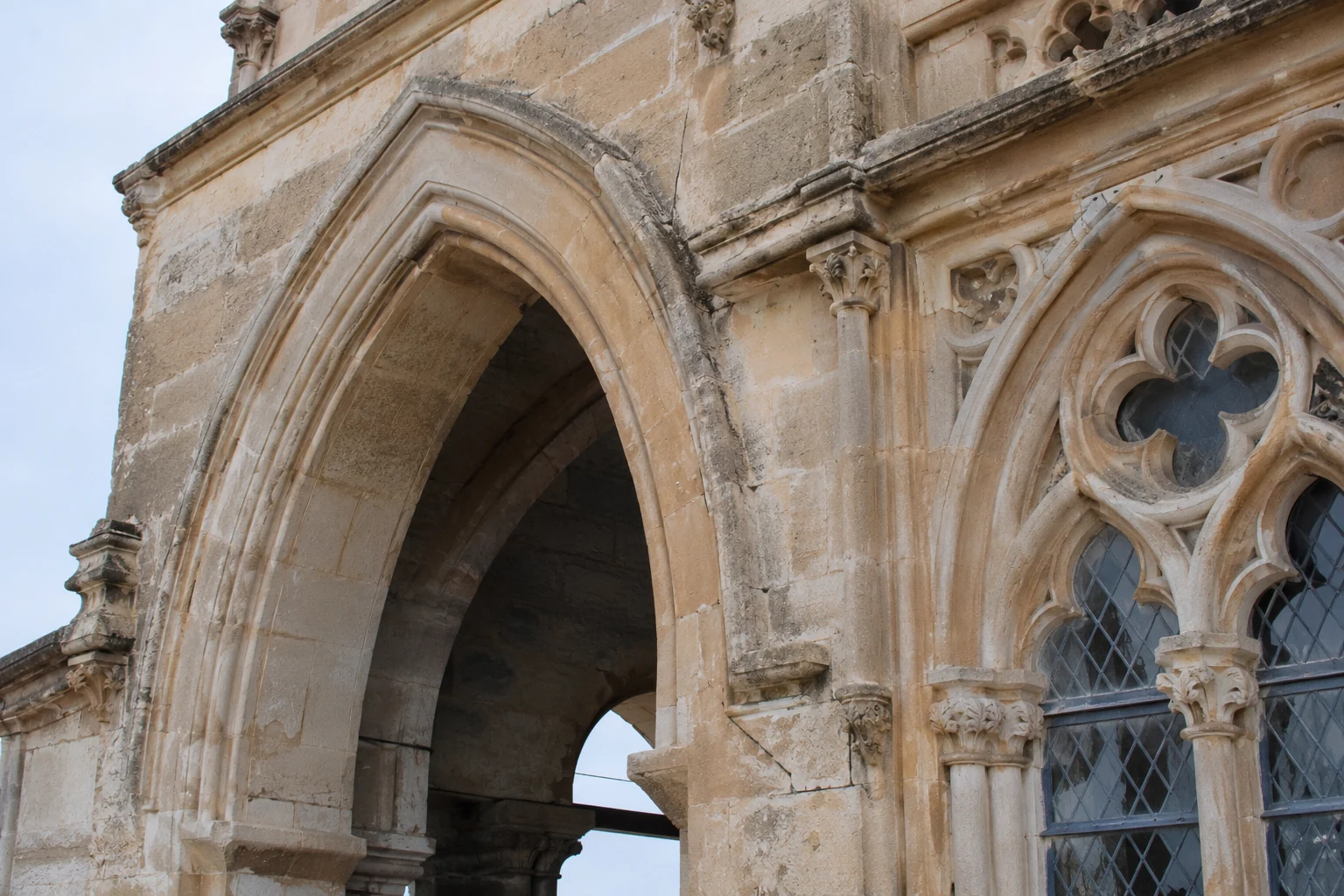
Bhuj beyond the pickup: palaces, craft and a city worth exploring
Get to know Bhuj through Aina Mahal, Prag Mahal and nearby craft visits, with historical context and practical ideas for an unrushed city day in Kutch.
Read the story