
Dhordo, Hodka and the Banni villages: a slower way to see Kutch
A village visit is most rewarding when it is a conversation rather than a collection of photographs. Around the Banni region, architecture, textiles and hospitality help explain how people make a home in a demanding landscape.
- Northern Kutch
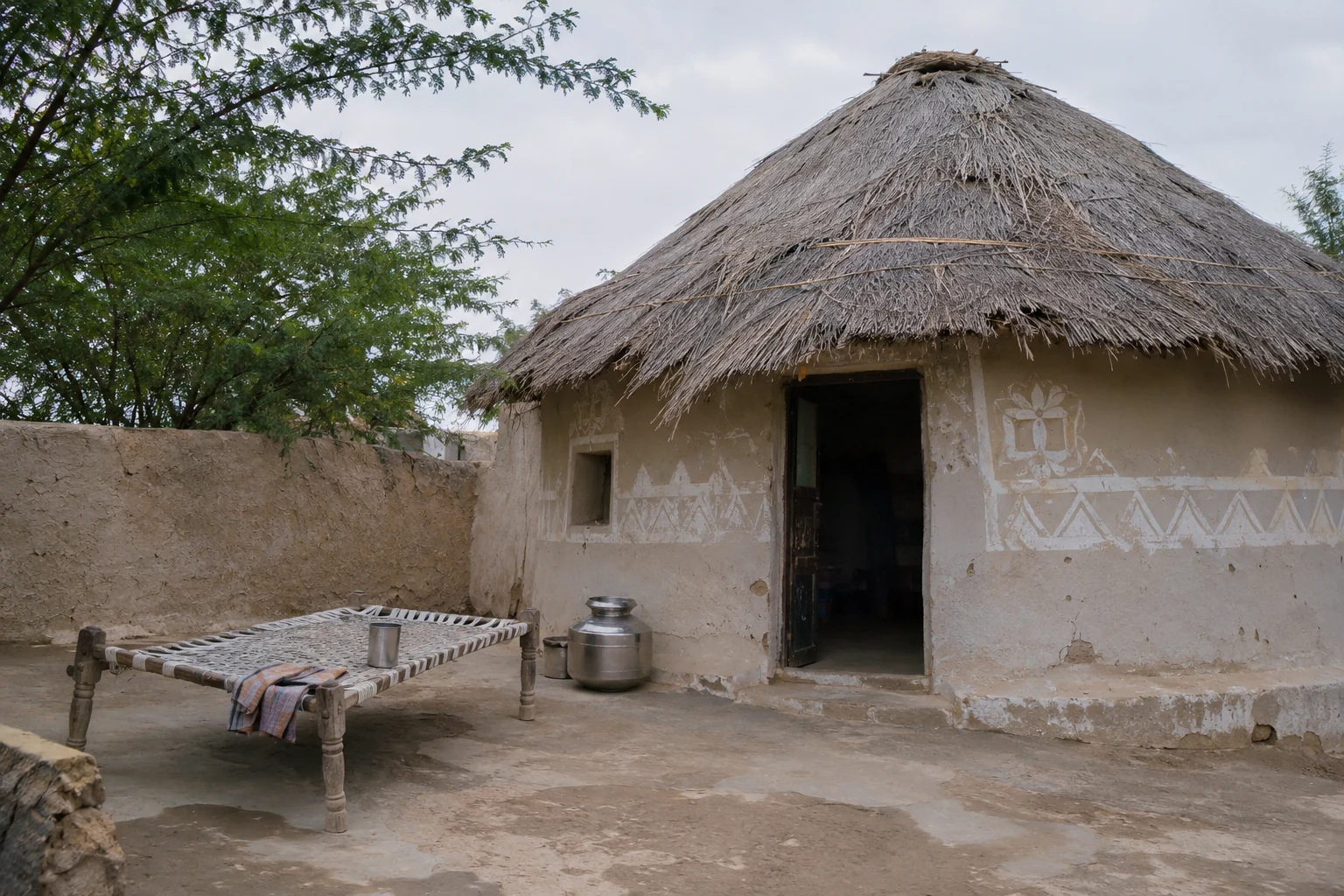
- Bhunga architecture
- Ask before photographing
Dhordo: a village with a global spotlight
Dhordo was recognised among UN Tourism’s Best Tourism Villages in 2023. The recognition belongs to the village and its tourism story; it is not an endorsement of every hotel or tour sold nearby.
Its connection with the White Rann and seasonal Rann Utsav has brought attention to rural hospitality and local culture. When comparing stays, ask where the property actually is, what kind of room is offered and which activities are included. A stay near Dhordo is not automatically a booking in the official festival tent city.
Source: UN Tourism: Best Tourism Villages 2023 ↗Read the landscape through a bhunga
The circular bhunga is one of Kutch’s most recognisable building forms. Traditional examples combine an earthen wall structure with a conical roof. Decoration may include clay relief and mirror work, but the shape also reflects adaptation to climate and local building knowledge.
Today, traditional homes, renovated buildings and modern bhunga-inspired guest rooms can look similar in photographs. Ask how a building is made and used rather than assuming every round room is a historic dwelling. Architecture becomes more interesting when its everyday purpose is part of the story.
Source: UN Tourism: Bhungas of Kutch ↗Hodka: leave room for the craft
Hodka is a useful place to slow the pace and look beyond a finished souvenir. Embroidery and other textile traditions across the Banni villages are connected to particular communities, makers and changing livelihoods. The distinctions matter more than a generic label saying “Kutch handicraft”.
Ask a host which workshops are receiving visitors that day. A demonstration depends on the maker’s availability and current work. Pay for a requested workshop where appropriate, and ask whether a purchase was made locally, by whom and with which materials.
Source: Gujarat Tourism: Kutch handicrafts ↗Gandhi nu Gaam and other village stops
Gandhi nu Gaam is another village stop featured in several of our journeys. Keep its role distinct from a palace, museum or staged attraction: homes and workspaces remain part of people’s daily lives.
Choose one or two visits that fit the actual route instead of rushing through a long list of village names. Let your driver or host arrange an introduction, ask before entering courtyards and accept that a household may prefer privacy. A friendly welcome does not imply consent to publish someone’s portrait.
A thoughtful village-and-Rann day
Work backwards from the evening you want on the White Rann. Allow a realistic lunch stop, flexible workshop time and a comfortable return journey. If Kala Dungar is important, discuss the trade-off in time rather than squeezing every northern stop into a single afternoon.
Carry small change for purchases, keep litter with you and dress with consideration for the place you are visiting. Ask before photographing people, textiles in production or interiors. Buying directly can be meaningful, but there is no obligation to purchase after every introduction.
Before you go
Can we visit a village without staying overnight?
A daytime visit can fit a northern Kutch route, subject to host availability. An overnight stay offers a different pace but is not essential.
Are all bhunga stays traditional houses?
No. Some are traditional structures and others are modern rooms inspired by the form. Ask about construction, facilities and location.
Can we photograph local families?
Ask first and respect a refusal. Obtain permission before sharing identifiable portraits publicly.
Sources & further reading
Historical, landscape and craft context is drawn from the organisations below. Route suggestions and visitor etiquette are our editorial guidance. Check current visitor arrangements before travelling.
Build a journey around what interests you.
Share your dates, group size and the places you would love to understand better. Our Bhuj team will help plan a sensible route.
Explore private cabs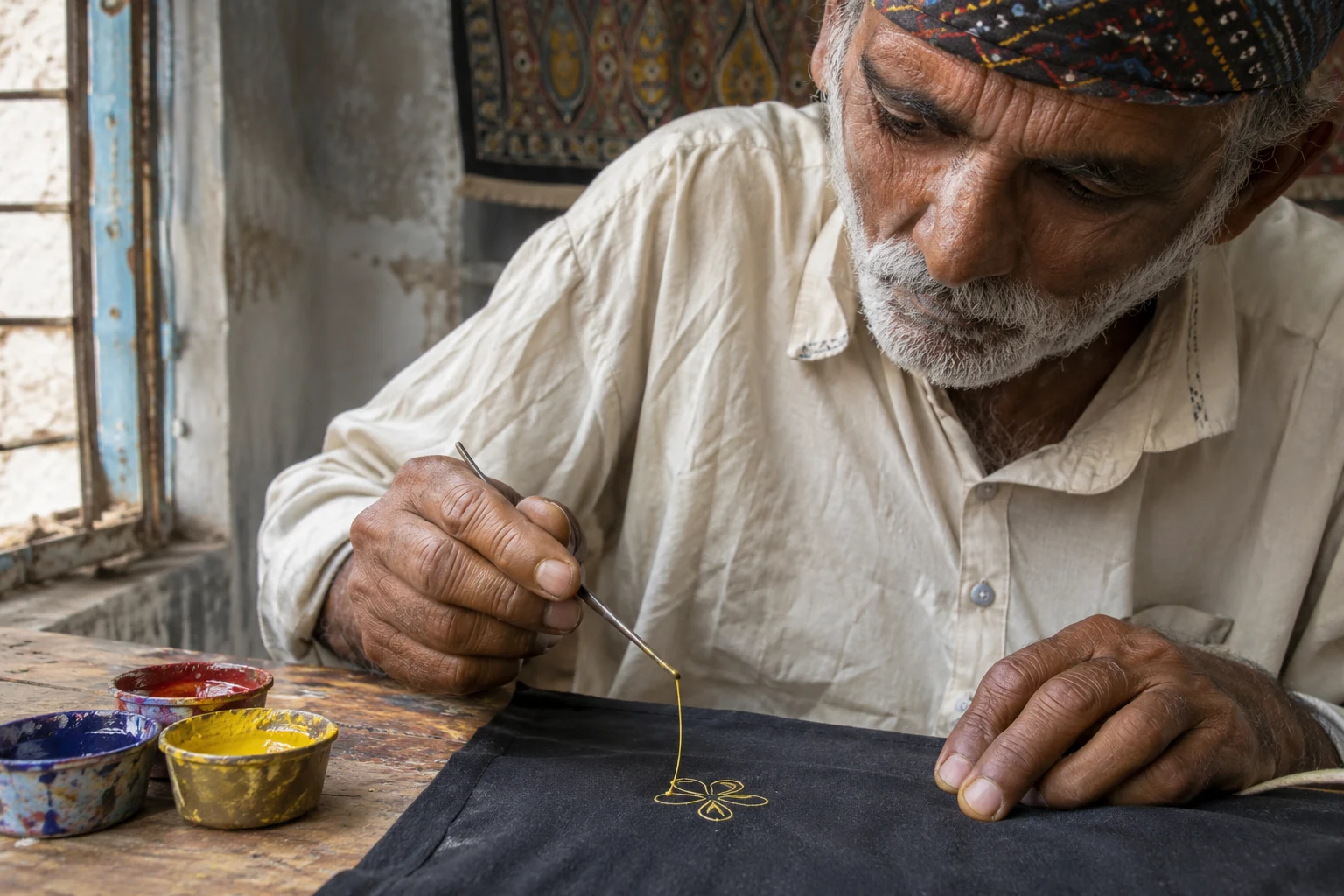
Nirona beyond the souvenir: Rogan painting, bells and lacquer
Learn what makes Nirona’s Rogan painting, metal bells and lacquer work distinctive, and how to plan a respectful artisan-workshop visit from Bhuj.
Read the story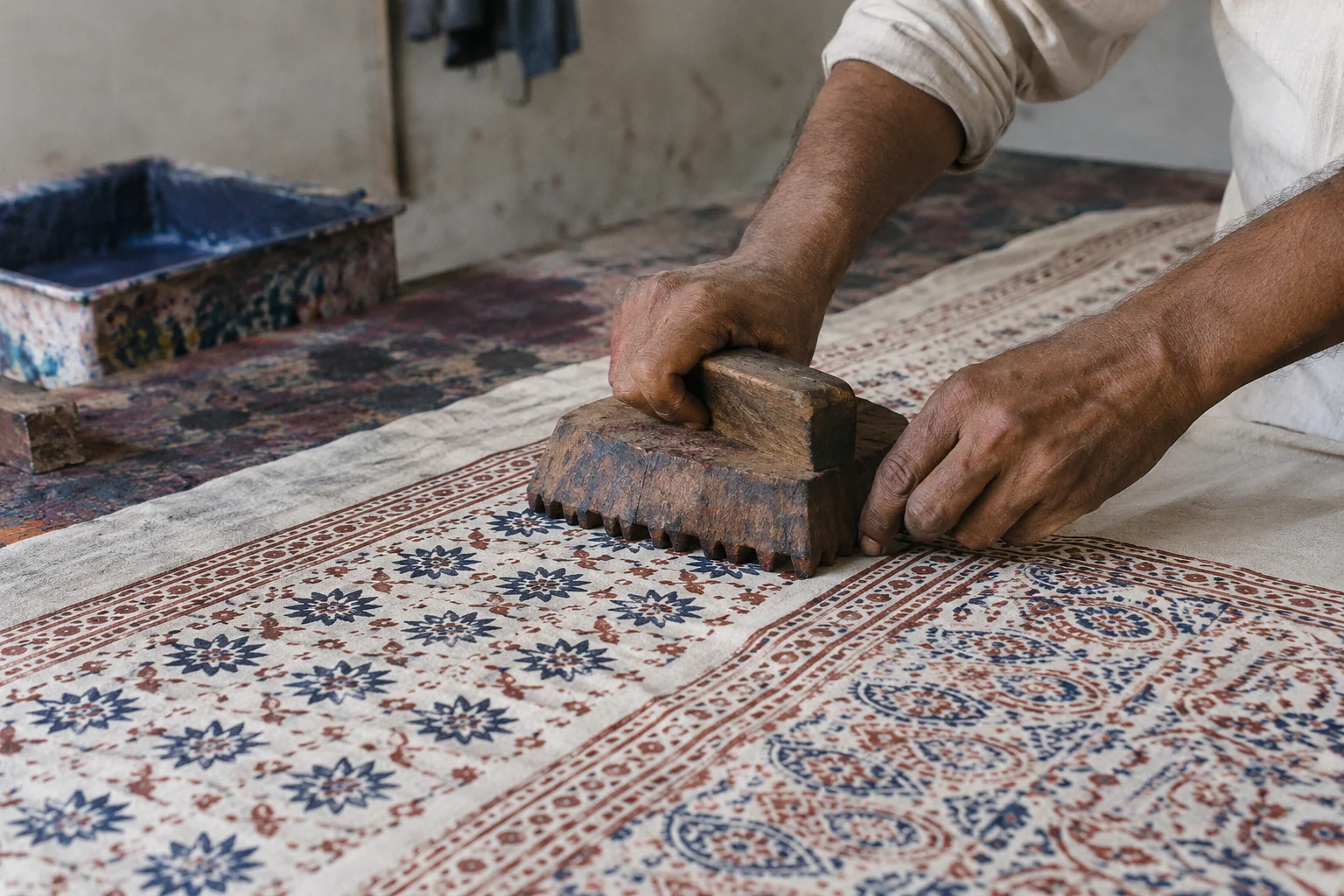
Ajrakhpur and Bhujodi: understanding Kutch through cloth
Discover Ajrakh block printing and Bhujodi weaving, learn what to ask artisans, and plan a textile-focused visit without confusing two different craft traditions.
Read the story