
Why is the Rann of Kutch white? The story behind the salt
At first glance, the White Rann seems almost impossible: a level white horizon where the sky does most of the moving. Understanding the landscape makes a visit more rewarding. The surface is salt, and the scene changes as water arrives, retreats and evaporates.
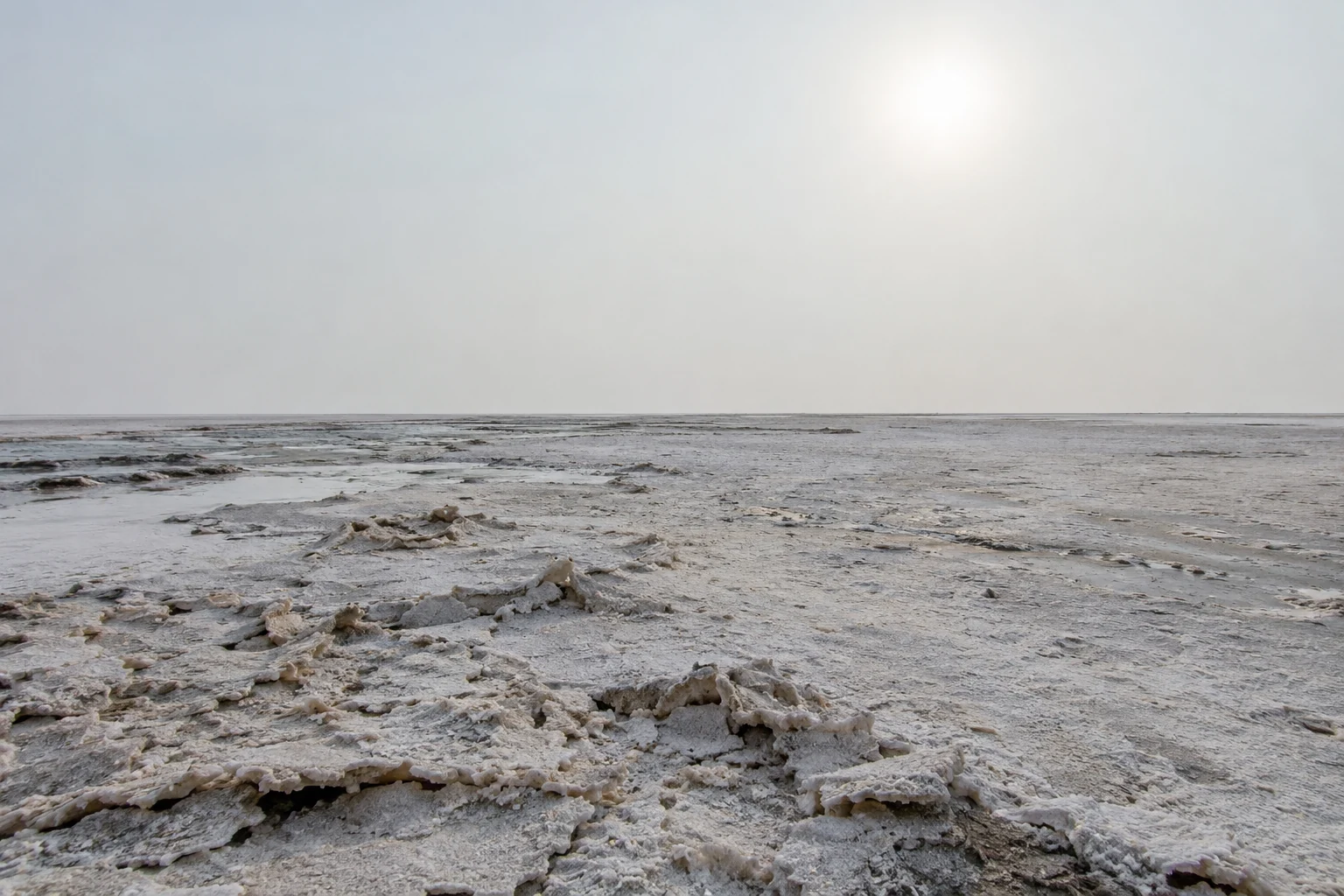
- Seasonal salt marsh
- Dhordo approach
- Best light: morning & sunset
From a shallow sea to a saline landscape
The Rann occupies a low-lying basin with a marine past. NASA describes it as a former shallow arm of the Arabian Sea that gradually became a saline mudflat through silting. Its present appearance is the result of a long landscape history and a repeating seasonal cycle.
During the monsoon, water spreads across the low ground. As drier weather returns, evaporation removes the water while dissolved salts remain. Crystals accumulate at the surface, creating the pale crust visitors associate with the White Rann. It is neither snow nor a conventional desert of sand dunes.
Source: NASA: India’s White Desert ↗Why the surface is not always brilliant white
A seasonal landscape has no fixed opening-day appearance. Rainfall, standing water and the drying process influence how white, firm or reflective the surface looks. Different patches can be wet, grey, muddy or salt-encrusted on the same visit.
For photography, treat a winter date as a planning window rather than a guarantee. Ask about current ground conditions before travelling. A photograph taken late in a dry season may show a very different surface from a visit shortly after a wet monsoon.
Source: India Cine Hub: Great Rann of Kutch ↗Great Rann, Little Rann and salt production
The Great Rann and Little Rann are separate parts of the wider saline landscape. The familiar Dhordo-side White Rann experience belongs to the Great Rann. A Little Rann wildlife outing is a different journey and should not be treated as an extra stop on the same northern Kutch day.
The natural salt crust seen on a tourist visit also differs from an organised salt-production site. Salt workers manage brine and evaporation in working landscapes; a scenic stop does not automatically include access to their workplaces.
Source: NASA: India’s White Desert ↗How to enjoy the White Rann
Plan time to stand still rather than simply arrive, take a picture and leave. Notice the texture underfoot, the changing colour at the horizon and how the same ground responds to front light and back light. Early or late light is often more comfortable for an unhurried outdoor visit.
Carry drinking water, sunglasses, sun protection and a layer for the return after dark. Use designated access areas and follow local staff instructions. Do not drive onto the flats, break the crust for a souvenir or assume a dry-looking patch is safe to cross.
Build the day around one evening
A village stop and a White Rann evening can make a satisfying northern Kutch day. Keep workshop time flexible and avoid filling the schedule with distant attractions just because they appear nearby on a small map.
Festival arrangements, permits, identification requirements and access can change. Confirm these for your dates before paying for travel. Moonlit visits depend on permission, weather and access; they should never be promised solely because a calendar shows a full moon.
Before you go
Is the White Rann made of sand?
The signature white surface is a salt crust over a seasonal saline landscape. It should not be confused with sand dunes.
Will I definitely see a dry white desert in winter?
Winter is a common planning period, but rainfall and drying conditions vary. Confirm the current surface and visitor access before your trip.
Is Rann Utsav the same as the White Rann?
The White Rann is a landscape; Rann Utsav is a seasonal tourism and cultural event associated with the region. Accommodation and activity inclusions vary.
Sources & further reading
Historical, landscape and craft context is drawn from the organisations below. Route suggestions and visitor etiquette are our editorial guidance. Check current visitor arrangements before travelling.
Build a journey around what interests you.
Share your dates, group size and the places you would love to understand better. Our Bhuj team will help plan a sensible route.
Explore private cabs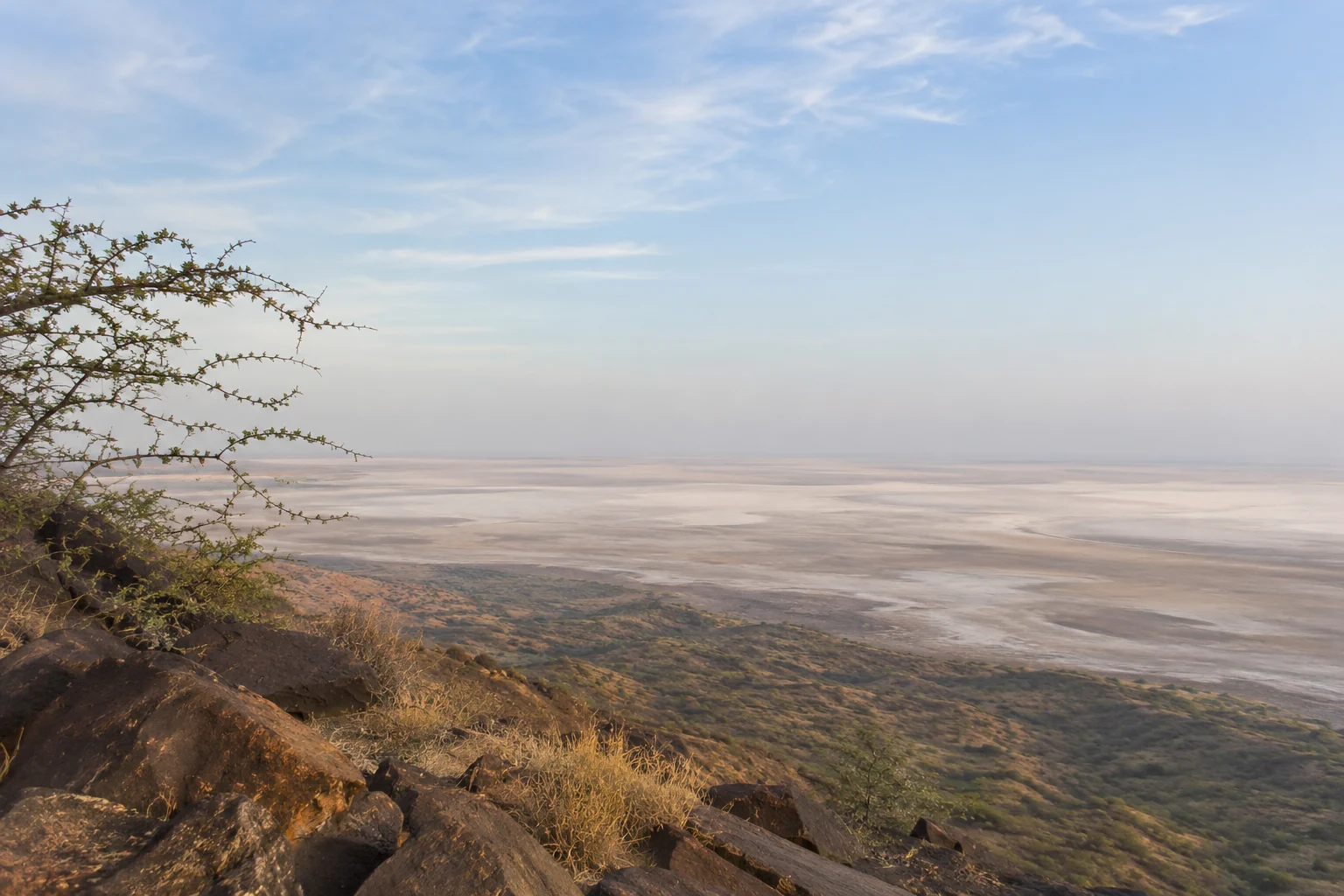
Kala Dungar: reading the Rann from Kutch’s Black Hills
Plan a Kala Dungar visit with context on the Black Hills, Great Rann viewpoint and Dattatreya tradition, plus route, walking and responsible photography advice.
Read the story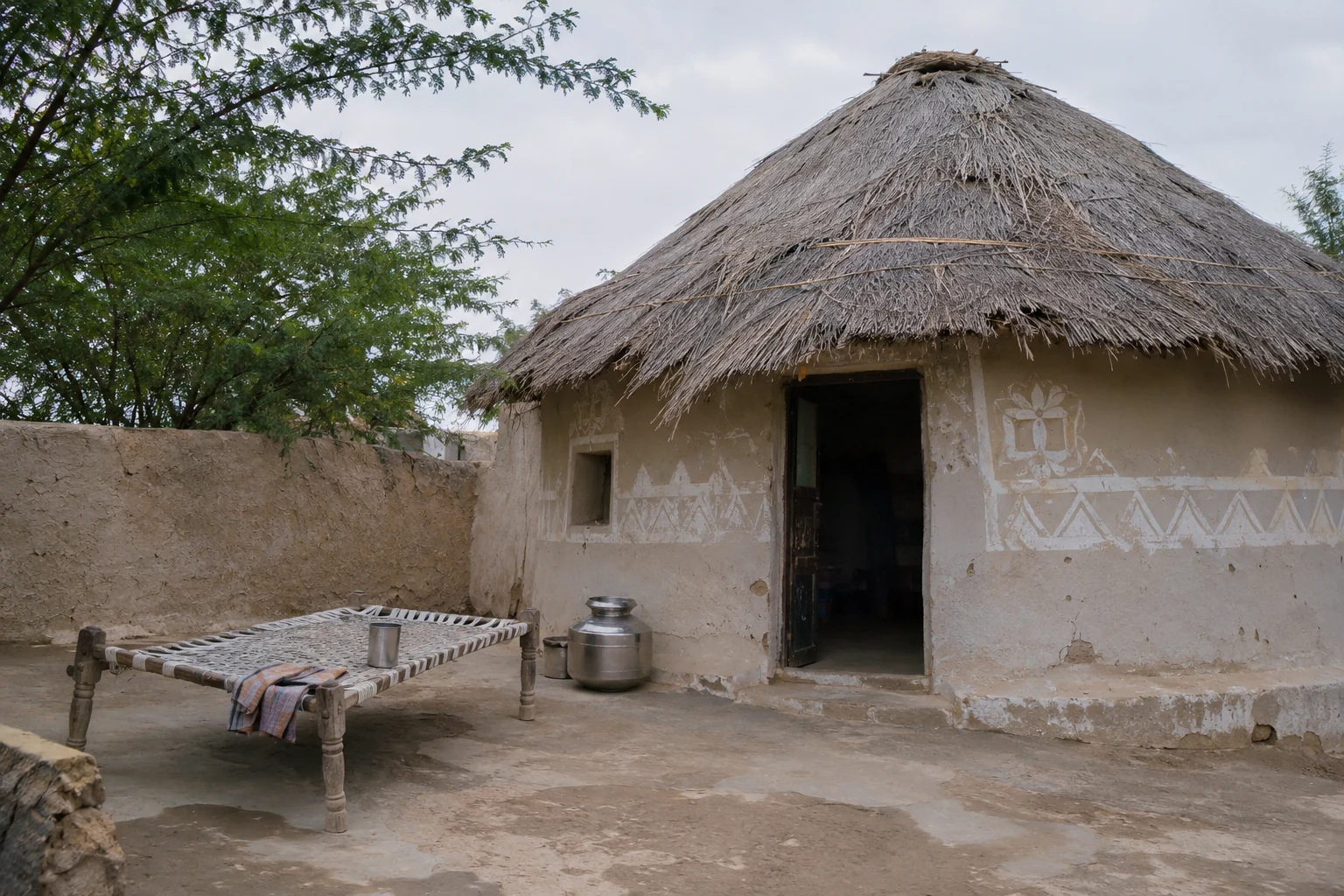
Dhordo, Hodka and the Banni villages: a slower way to see Kutch
Explore Dhordo, Hodka and Gandhi nu Gaam through bhunga architecture, embroidery and respectful village visits, with practical advice for a northern Kutch day.
Read the story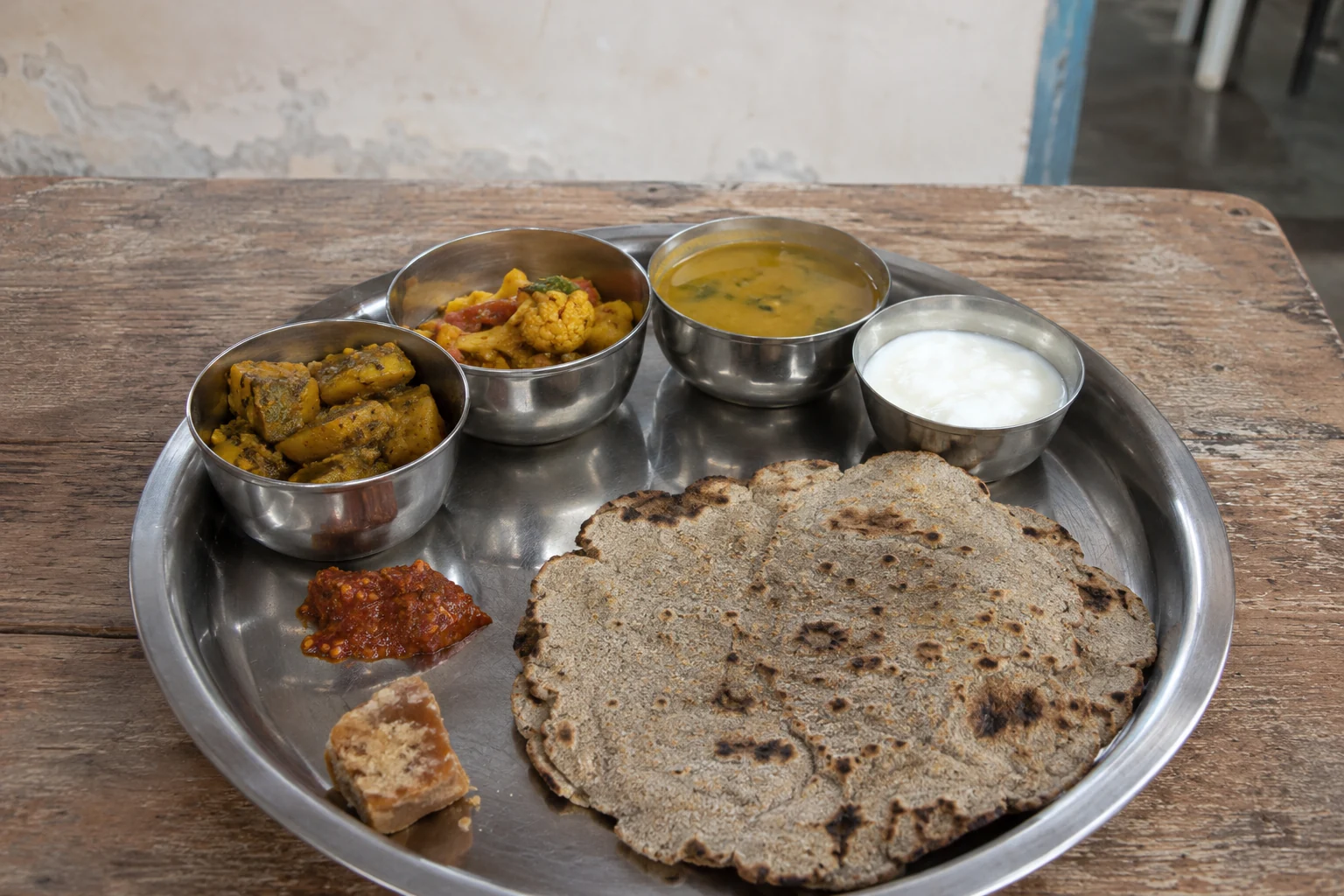
What is Kutch famous for? A practical first-trip guide
Plan a balanced Kutch holiday around the White Rann, craft villages, heritage and food, with guidance on seasons, route choices, packing and respectful travel.
Read the story